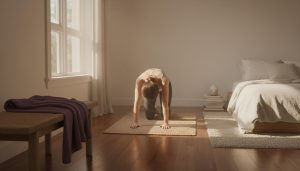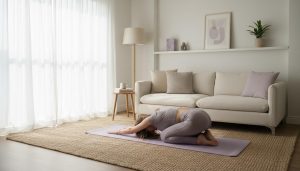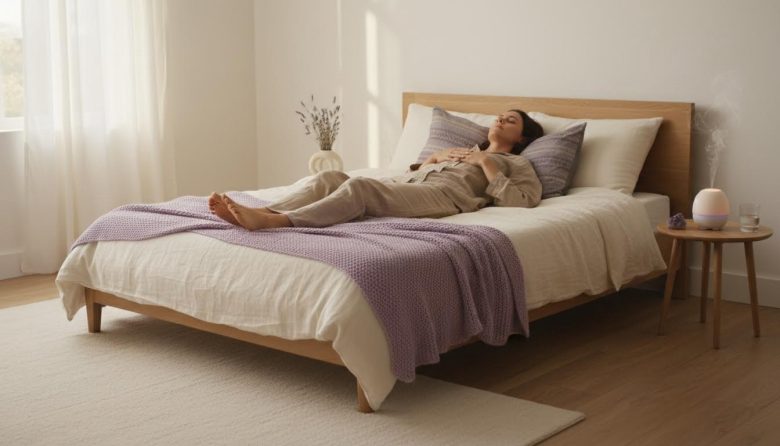
Picture this: it’s 10 p.m., you’ve just collapsed onto your couch after a brutal commute, phone in hand, scrolling through endless feeds. Your shoulders are knotted from desk hours, mind racing with tomorrow’s to-dos. Stress lingers like city fog, keeping sleep at bay.
Enter a simple bedtime breathing routine. Just 5 minutes in bed, no fancy gear needed. It dials down that scroll-induced tension, eases you into restful sleep, and resets your nervous system for the next day.
This isn’t about forcing zen in a chaotic urban life. It’s a low-effort nightly reset that fits tiny apartments or shared spaces. Beginners, start with one breath cycle tonight—no pressure, just gentle release.
I’ve tweaked it for real schedules: post-dinner unwind, late-shift cooldown, or pre-bed scroll break. Feel calmer breaths lead to deeper rest, one night at a time.
Why This Bedtime Breathwork Tackles Your Scroll-Induced Tension
Endless screens spike cortisol, leaving desk workers wired at bedtime. This routine flips the switch to parasympathetic mode—your body’s natural chill-out system. Studies show box breathing cuts anxiety by 20% in minutes, perfect for late-nighters.
Think post-commute: traffic horns still echoing, emails unchecked. A few cycles lower heart rate, loosen tight chests from hunching over laptops. No gym, no apps—just your breath as the ultimate urban unwind tool.
For freelancers burning midnight oil, it quiets the mental chatter. Pair deep exhales with releasing one worry per breath. Wake up less groggy, more ready for coffee and chaos.
Your 5-Minute Core Sequence: Breath by Breath
Dim the lights or pull your blanket up—signal to your brain it’s wind-down time. Lie in bed after brushing teeth, phone face-down across the room. This sequence uses 4-4-6 breathing: inhale 4 counts, hold 4, exhale 6. Repeat for calm waves.
- Prep your space (30 seconds): Scoot to your bed’s edge if sharing a small apartment. Fluff pillow under knees for lower back ease—common after standing all day. Close eyes softly, hands on belly to track breath rise.
- First cycle: Ground in (1 minute): Inhale through nose for 4 slow counts, feel belly expand like filling a balloon. Hold for 4, notice tension in jaw or forehead. Exhale mouth for 6, sigh out the day’s commute gripes. Do 4 rounds.
- Second cycle: Release deeper (1.5 minutes): Same 4-4-6, but visualize stress as smoke drifting out on exhale. Picture desk clutter or boss emails floating away. Urban cue: Imagine exhaling city sirens into silence. 5 rounds here.
- Third cycle: Soften body scan (1 minute): Keep breathing, now scan from toes to head. Tense and release each spot on exhale—feet after walking blocks, shoulders from bag straps. 4 rounds, melting into mattress.
- Close gently (1 minute): Slow to natural breaths, one hand on heart. Whisper a neutral “done for today.” Drift off or segue to sleep—no rush.
Try it post-desk: I did after a 9-hour screen session, knots gone by cycle two. Total 5 minutes, but feels like a mini-vacation.
Quick Tips to Make Every Night Smoother
- Phone face-down first—set it on airplane mode across the room.
- Cozy corner setup: Extra pillow for propped knees in tight spaces.
- Dimmer switch or phone flashlight—mimic sunset without full dark.
- Herbal tea sip pre-breath, like chamomile for extra ease.
- Urban white noise: Fan or app drowns neighbor footsteps.
- Track mood pre/post in notes app—one word each night.
- Layer with a quick stretch: Roll shoulders before lying down.
For Busy Nights: The 2-Minute Fallback Reset
Exhausted from shift work or kid bedtime battles? Skip setup. Just flop into bed, eyes closed.
Do three giant 4-4-6 breaths: Inhale filling lungs, hold, exhale long like fogging a mirror. Feel instant drop in racing thoughts.
For parents: Under covers while kids settle nearby. Freelancers: Post-deadline crash. No props, pure breath—your simplest reset when time’s tight.
I use it after late dinners; tension melts, sleep hits faster. Keep it as your go-to when full routine feels too much.
Make It Sustainable: Slot It Into Your Real Routine
Link to existing habits: Set alarm 10 minutes pre-bedtime. Brush teeth, then breathe—automatic trigger.
Track wins weekly: Note “slept through” or “less morning fog” in phone. Celebrate small: Extra 30 minutes rest adds up.
Gently scale: Week one, 2 minutes; week two, full 5. Miss a night? No guilt—restart fresh. This builds a repeatable reset without burnout.
Consider how to prep light meals for the week ahead to avoid late-night hunger that amps stress. Your evenings stay smoother. Stick to one breath tonight; that’s the win.
Urban Stories: How It Fits Small Apartments and Late Schedules
Take Mia, commuter on the subway till 9 p.m. She does cycles under thin blanket, exhaling train rattles. Wakes refreshed for early meetings.
Freelancer Alex in a studio shares bath time with roommate. Props against wall sitting up—breath drowns keyboard clicks echo. Deadlines feel lighter.
New parent Jordan: 2-minute fallback mid-night feedings. Quick reset curbs exhaustion spirals in cramped nursery corner.
These fit desk-to-bed flows or screen marathons. Beginners, pick one story that clicks—try it your way tonight. Gentle nudge: You’ve got this.
After breathing, ease into a cozy reading routine to unwind at night for deeper relaxation. It layers naturally.
FAQ
Can I do this routine sitting up if lying down feels off?
Yes, totally—prop against pillows or headboard in bed. Great for acid reflux or tight hips from desk chairs. Keep spine straight, breath flows same; adjust for your body’s comfort nightly.
What if my mind wanders during the breaths?
Super normal, especially post-scroll. Gently note the thought, return to count—like traffic passing by. No judging; it strengthens focus over nights. Wander less each time.
Does it work if I’m already half-asleep?
Perfect scenario—shorten to 2 minutes. Slow breaths deepen that drowsy state without full wake-up. Ideal for overtired urban hustlers; slip right into sleep.
Any tweaks for tiny bedrooms or shared spaces?
Ear buds optional for guided count if noise bleeds through walls. Sit cross-legged on floor mat if bed’s occupied. Breath stays silent, invisible—fits anywhere.
How soon will I notice less stress?
Many feel calmer after 3 nights; full groove by week one. Track subtle shifts: Easier mornings, fewer tosses. Consistency key, not perfection—your pace.
One more tip: If hunger hits pre-bed, a nutritious snack plan to avoid hunger crashes keeps blood sugar steady. Breathwork shines brighter.